Italy's freshwater fish fauna is a mixture of native Mediterranean basin species, northern European species that colonised through the Alps, and a significant number of introductions over the past century. The distinction matters for fishing because it shapes both what you encounter and how conservation rules apply. Introduced species like catfish and bass carry fewer protections and no closed season in most regions; native salmonids are subject to strict closed seasons and catch limits.
The following covers the species most commonly encountered by recreational anglers across Italian lakes and rivers, with notes on behaviour, habitat, and the tackle approaches that are most consistently effective.
Brown trout — Salmo trutta
The brown trout is native to Italian river systems and is the principal target of the country's fly fishing and light spinning community. It occupies cold, well-oxygenated rivers and streams — mainly in the Alps, Apennines, and their foothills. The prealpine rivers of Trentino, Piedmont, and Lombardy hold the largest populations.
Brown trout in Italy are subject to some of the most tightly regulated fishing rules in freshwater. Closed seasons typically run from October through March for rivers, with year-round no-kill zones on many designated stretches. The legal minimum size is set regionally, typically at 22–25 cm, but some managed waters require immediate release of all fish regardless of size.
The species feeds selectively and reacts to natural insect hatches in a way that rewards fly anglers with specific entomological knowledge. Dry fly fishing works well on slower pools from late April through September; nymphing under the surface in faster riffles produces through the spring. Spinning with small spinners (Mepps No. 1–2) is permitted on most regulated stretches but restricted on dedicated fly-only sections.
Rainbow trout — Oncorhynchus mykiss
Rainbow trout are not native to Italy but have been stocked into managed waters since the 1880s. They are present in most pay-per-fish (laghetto di pesca sportiva) commercial fisheries and in some rivers where restocking programs supplement wild populations. In the northern lakes — particularly Garda and some smaller Venetian pre-alpine lakes — rainbows have established self-sustaining populations in deeper, cold areas.
Rainbows tend to be less selective than browns in their feeding, which makes them more accessible to beginning anglers. They respond well to spinning lures, spoons, and fly presentations. In commercial laghetti, floating pellets and powerbait are commonly used; in natural waters, the same approaches that work for brown trout apply.
European perch — Perca fluviatilis
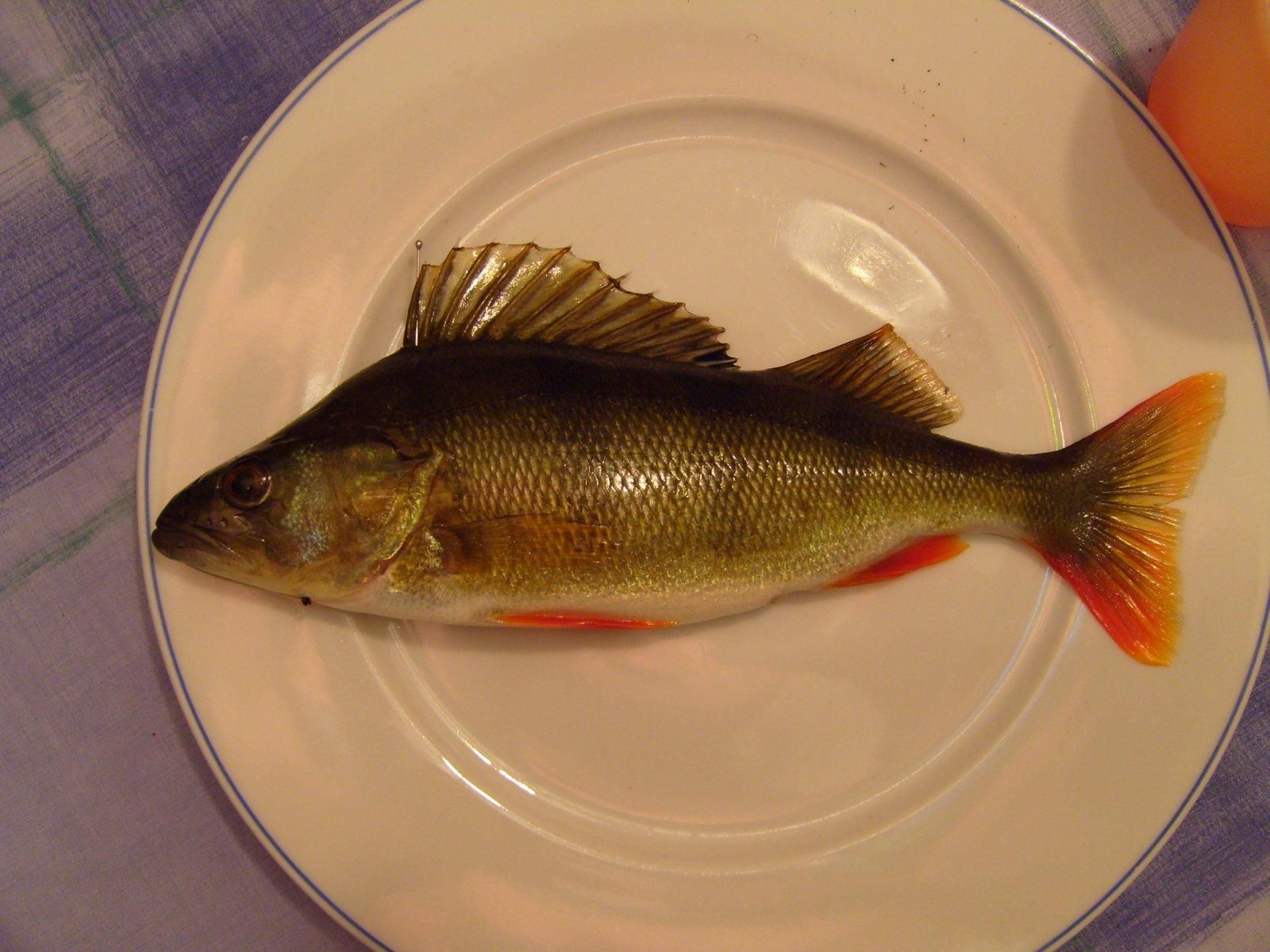
The European perch is one of the most widely distributed freshwater fish in Italy, present in virtually every lake and in most slow to medium-pace rivers. It is a significant target for anglers using light spinning tackle because it responds aggressively to small soft plastics, micro-jigs, and spinners.
Perch are schooling fish and their distribution within a lake or reservoir shifts with season. In spring, they move onto shallow gravel and sandy banks near vegetation to spawn, making them accessible to shore anglers. Through summer, the schools move deeper following baitfish. Autumn brings them back into productive shore-fishing range as surface temperatures cool.
The species has no closed season in most Italian regions and no minimum size in most provinces. FIPSAS guidelines recommend returning smaller specimens to maintain population structure, though this is not universally observed.
Pike — Esox lucius
Pike occupy the larger lakes, reservoirs, slower river stretches, and backwaters across northern and central Italy. Lake Maggiore, Como, Garda, the middle Po, and the Adda river below Lecco are among the most documented pike waters. Specimens above 10 kg are regularly caught; fish to 15 kg exist in the larger lakes.
Pike are ambush predators that hold near structural cover — weed beds, sunken wood, rock edges, and bridge pilings. Spinning with large soft shads of 12–18 cm on 20–30 g jig heads covers most situations in rivers; in lakes, trolling with large plugs or jerkbaits at 1–3 m depth along the 5–8 m depth contour produces fish through summer and autumn.
A closed season for pike exists in most northern regions, generally covering the March–April spawning period. Minimum size is set at 40–50 cm depending on the province. Many serious pike anglers practice catch and release regardless of size, particularly for larger specimens.
Wels catfish — Silurus glanis
The wels catfish was introduced to Italy in the 1970s and has spread through much of the Po basin and connecting river systems. It is now among the most significant large predators in Italian freshwater. Fish above 1.5 m are common in the middle Po; documented catches from the Ticino and Adda have exceeded 2 m and 80 kg.
Catfish fishing in Italy centres on the Po and its main tributaries. Standard methods include night fishing with whole deadbaits (roach, bream) ledgered on the bottom in deep channels, and daytime jigging with large shad-style soft baits in summer. The fish are crepuscular and nocturnal feeders, with the hours after dark through to 3 AM the most productive window from June through September.
There is no closed season or size restriction for catfish in most Italian regions — the species is considered an invasive predator under Italian law, and regional authorities generally encourage its removal from waters where it threatens native salmonid populations.
Carp — Cyprinus carpio
Common carp are present throughout Italy's lowland waters — lakes, reservoirs, the Po plain rivers, and irrigation canals. The largest populations are in the Po valley's network of agricultural channels and in managed carp lakes in the Veneto, Emilia-Romagna, and Lombardy. The Italian carp fishing scene has adopted British-style carp angling techniques — boilies on hair rigs, bite alarms, bivvy fishing — and dedicated carp waters with fish to 30+ kg exist in several regions.
Mirror carp and common carp coexist in most waters. Crucian carp (carassius carassius) are present in slower, oxygen-poor environments that other species avoid. Grass carp (carpa erbivora) have been stocked into several irrigation reservoirs and occasionally appear in catches near these managed systems.
Tench — Tinca tinca
Tench occupy the warm, weedy, shallow sections of lakes and slow rivers across Italy. They are bottom feeders with a preference for soft mud and aquatic plant growth. The Po valley's canal network and the shallow margins of large lakes like Trasimeno in Umbria and Varano in Puglia hold dense tench populations.
Fishing for tench in Italy follows the same approach as in northern Europe: a slow float or ledger fished tight to weed cover or over a baited area, using worm, maggot, or sweetcorn on a size 10–14 hook. Early morning is the most productive time, before the fish move deeper as light increases.
Coregone — whitefish — Coregonus spp.
Several species of coregone (whitefish) are found in Italy's deep prealpine lakes — Maggiore, Como, Lugano, and some smaller Trentino lakes. These are cold, deep-water species that spend most of the year at depth but move into shallower water during autumn and winter to spawn. They are caught by specialist anglers using small spoons or feather rigs presented at specific depths, typically 8–20 m, either from boats or from specific shore positions.
Coregone have significant cultural value in the lacustrine communities around the northern lakes. Lake Maggiore's "lavarello" is served in local restaurants and forms part of the region's culinary identity. The fishing season is carefully managed by provincial authorities to protect spawning stocks; check current rules locally before targeting this species.
Species identification, conservation status, and applicable fishing regulations change regularly. Some species listed here are subject to regional protections not covered in this overview. For current rules on minimum sizes, closed seasons, and catch limits, consult the relevant provincial fisheries authority or the FIPSAS regional office.

